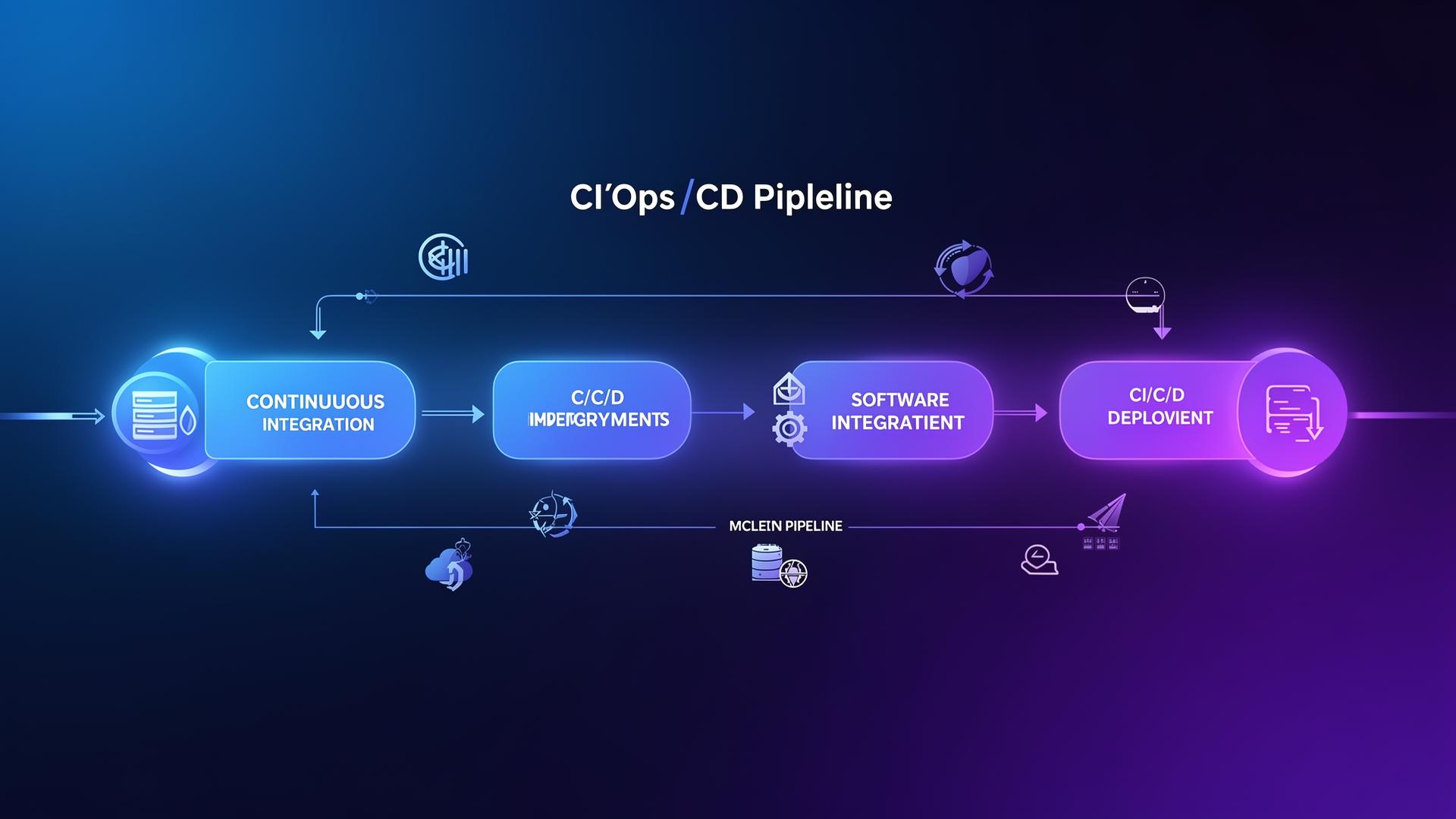
CI CD Pipelines: Automating Your Way to Faster Releases
Remember the days when deploying software meant someone copying files to a server at 2am on a Sunday? Perhaps running a checklist of manual steps and hoping nothing was forgotten? Those days should be behind us, yet many organisations still rely on manual processes that slow development and introduce unnecessary risk.
Continuous Integration and Continuous Deployment, commonly abbreviated as CI CD, represents a fundamental shift in how software reaches production. Instead of periodic, stressful release events, code flows continuously from developer to production through automated pipelines.
Understanding Continuous Integration
Continuous Integration addresses a simple problem. When multiple developers work on the same codebase, their changes can conflict. The longer they work in isolation, the more painful integration becomes. CI solves this by having developers integrate their changes frequently, ideally multiple times per day.
The mechanics are straightforward. Developers commit code to a shared repository. The CI server detects the change and runs a predefined sequence of steps. Code compiles. Unit tests execute. Static analysis checks for common issues. If anything fails, the team knows immediately.
Moving to Continuous Deployment
If continuous integration validates that code works, continuous deployment takes the next logical step by automatically releasing validated changes to production. Every successful build that passes all tests proceeds through the pipeline to reach users.
Automated pipelines eliminate failure modes. Every deployment follows exactly the same process. Configurations are code, version controlled and tested like any other change. Rollbacks are push button operations.
Pipeline Architecture
A typical CI CD pipeline consists of stages that code passes through sequentially. The build stage compiles code and produces deployable artifacts. Testing stages follow with unit tests, integration tests, and end to end tests. Security scanning deserves its own stage. Finally, deployment stages push artifacts to target environments.
If you need help implementing CI CD pipelines or improving existing automation, reach out through the contact page.
## Pipeline Design: The Simple Pattern
Most teams succeed with:
- build → test → security checks → deploy to dev → deploy to prod
The key is ensuring each stage is deterministic and produces an artefact you can promote without rebuilding.
## Security Without Slowing Delivery
- run dependency scanning and SAST on every change,
- enforce secret scanning,
- and sign artefacts.
Shift-left works when failures are fast and actionable.
## Release Confidence
Add progressive delivery techniques:
- canary deployments,
- feature flags,
- automated rollback on SLO breach.
This is how you ship faster *and* safer.
## Pipeline Design: The Simple Pattern
Most teams succeed with:
- build → test → security checks → deploy to dev → deploy to prod
The key is ensuring each stage is deterministic and produces an artefact you can promote without rebuilding.
## Security Without Slowing Delivery
- run dependency scanning and SAST on every change,
- enforce secret scanning,
- and sign artefacts.
Shift-left works when failures are fast and actionable.
## Release Confidence
Add progressive delivery techniques:
- canary deployments,
- feature flags,
- automated rollback on SLO breach.
This is how you ship faster *and* safer.