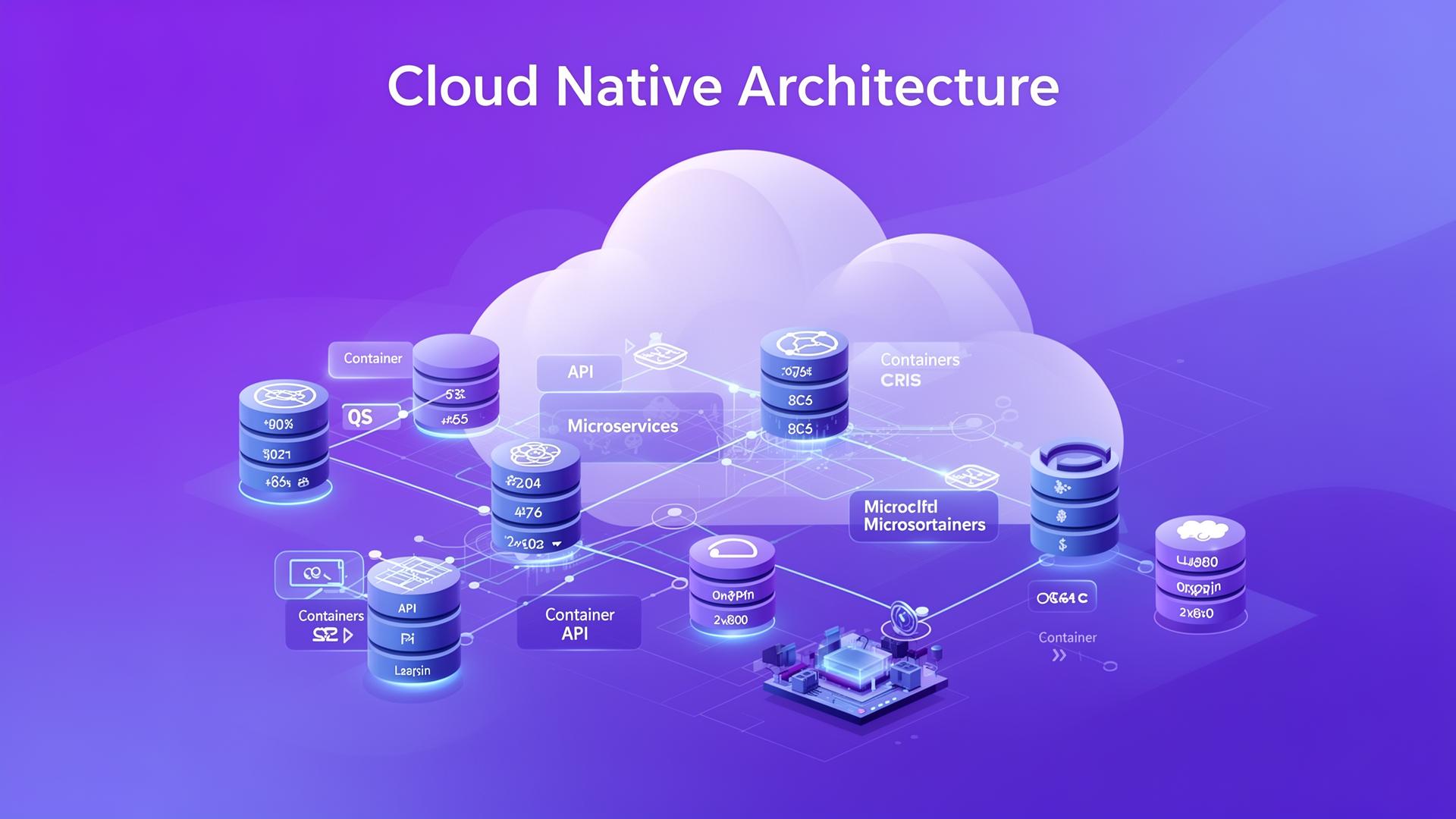
# Cloud Native Architecture: Building Applications for the Modern Era
Traditional applications assumed stable infrastructure. Servers ran for years. Scaling meant bigger hardware. Failures required manual intervention. Deployment happened infrequently with careful planning.
Cloud native architecture embraces infrastructure ephemerality. Instances come and go. Scaling happens horizontally. Failures self-heal. Deployment is continuous. Applications designed for this reality perform better and cost less.
## Cloud Native Principles
Several principles guide cloud native design.
**Microservices** decompose applications. Rather than monolithic deployments, applications comprise many small services. Independent development, deployment, and scaling. Technology choice per service.
**Containers** package applications. Consistent runtime environment from development to production. Lightweight isolation. Rapid startup enables dynamic scaling.
**Dynamic orchestration** manages containers. Kubernetes or equivalent schedules workloads. Health monitoring replaces failed instances. Scaling responds to load.
**Declarative APIs** configure everything. Infrastructure as code. GitOps workflows. Automation throughout.
## Key Patterns
Cloud native applications employ specific patterns.
**Statelessness** enables horizontal scaling. Application instances hold no session state. State lives in external stores. Any instance can handle any request.
**Service mesh** handles cross-cutting concerns. Traffic management, security, and observability separated from application code. Istio, Linkerd, or equivalent.
**Event-driven architecture** decouples components. Asynchronous communication via message queues. Producers and consumers scale independently.
**Observability** provides visibility. Distributed tracing follows requests across services. Metrics aggregate performance data. Logs centralise for analysis.
## Adoption Considerations
Moving to cloud native requires transformation.
**Organisational change** accompanies technical change. DevOps culture enables rapid deployment. Team structures align with service boundaries. Skills evolve.
**Incremental migration** reduces risk. Strangler fig pattern extracts services from monoliths. New capabilities as microservices. Gradual transformation.
**Platform engineering** provides foundation. Internal developer platforms abstract infrastructure complexity. Golden paths enable productivity.
If your organisation needs help with cloud native architecture or application modernisation, contact us through our contact page.
## Cloud-Native Is a Discipline
Cloud-native is not “we moved to Kubernetes”. It is:
- automation-first delivery,
- resilient design,
- and observable systems.
## Migration Tip
Refactor only what provides value. Many systems succeed with a hybrid approach:
- lift-and-shift the database,
- modernise stateless services first,
- and retire legacy components gradually.
Avoid “big rewrites” unless the current architecture cannot meet requirements.