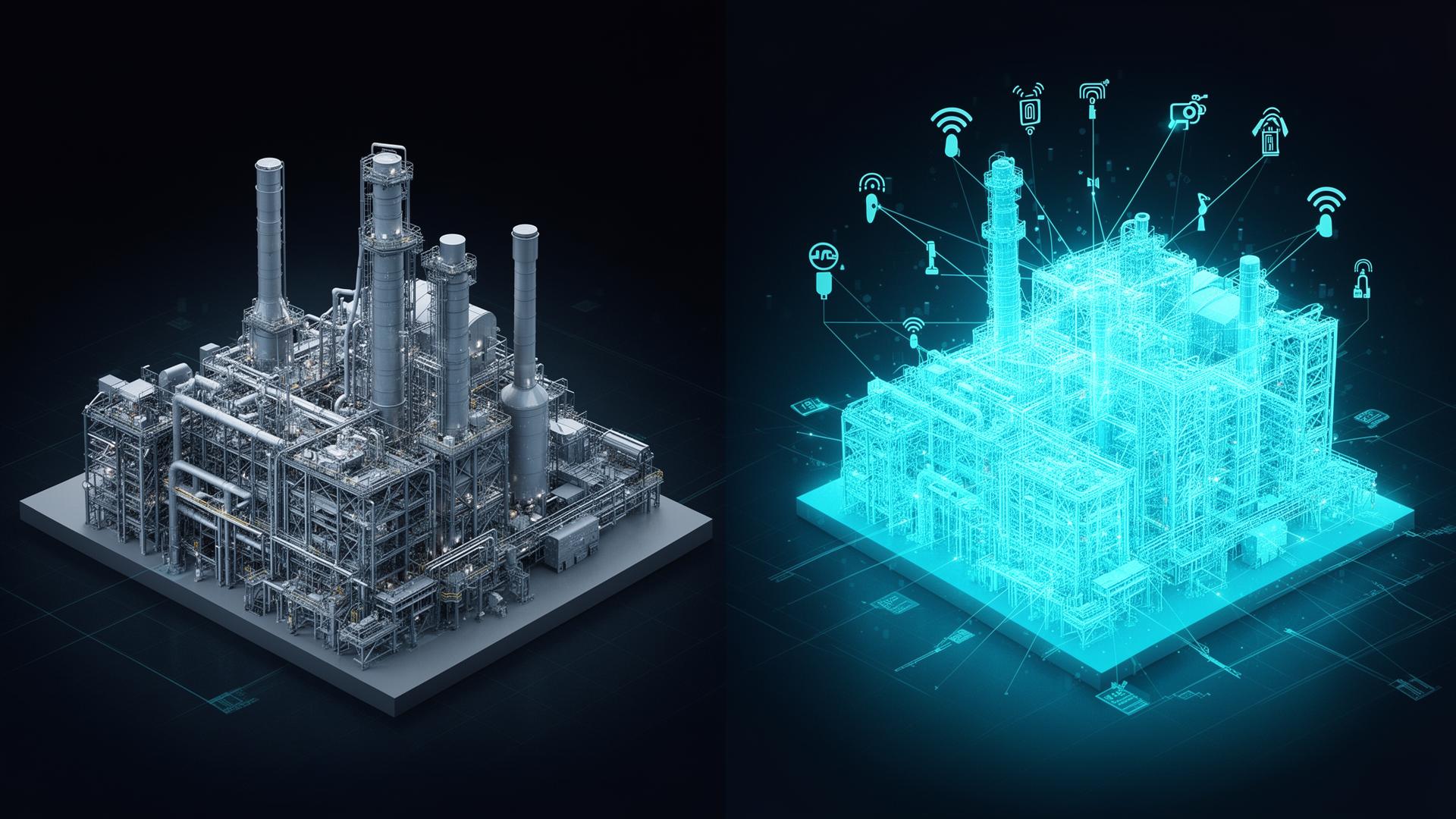
# Digital Twin Technology: Bridging Physical and Virtual Enterprise Operations
Let me explain something that is transforming manufacturing, logistics, energy, and dozens of other industries. Digital twin technology creates virtual replicas of physical assets, processes, and systems that update in real time based on sensor data. This is not science fiction. Major enterprises are already using digital twins to predict failures, optimise operations, and simulate changes before implementing them.
## What a Digital Twin Actually Is
A digital twin is a dynamic virtual model connected to a physical counterpart through real-time data streams. Unlike static 3D models or CAD drawings, digital twins continuously reflect the current state of the physical asset they represent. They incorporate sensor data, operational parameters, environmental conditions, and historical information.
The connection is bidirectional. Sensors in the physical world update the digital model. Simulations and analyses in the digital world can inform actions in the physical world. This creates a powerful feedback loop that enables predictive and prescriptive capabilities impossible with disconnected systems.
## Enterprise Applications of Digital Twins
In manufacturing, digital twins represent entire production lines. Engineers can monitor equipment health, predict maintenance needs, and simulate process changes without disrupting actual production. A factory might test the impact of a new component supplier or a modified assembly sequence entirely in the virtual realm before committing to changes.
Energy and utilities use digital twins for grid management and renewable energy optimisation. A wind farm digital twin might predict power output based on weather forecasts, optimise turbine angles, and detect early signs of mechanical wear before failures occur.
Supply chain operations benefit from digital twins that model the flow of goods across networks. When disruptions occur, logistics teams can simulate alternative routing strategies and predict impacts on delivery times before making decisions.
Built environment applications include digital twins of buildings, campuses, and even entire cities. Facility managers use these models for energy optimisation, space planning, and maintenance scheduling. Smart city initiatives apply similar principles at urban scale.
## Technical Architecture for Digital Twins
The IoT layer provides the sensory foundation. Physical assets need instrumentation that captures relevant state data and transmits it reliably. This might include temperature sensors, vibration monitors, flow meters, position trackers, or any other measurements relevant to the asset's function.
The integration layer connects sensor data to the digital model. This involves data ingestion pipelines, normalisation and quality checks, and storage in time-series databases optimised for the access patterns that digital twins require.
The modelling layer maintains the virtual representation. This might use physics-based simulation engines, machine learning models trained on historical data, or hybrid approaches that combine both. The complexity of the model depends on the use case and the fidelity required.
The analytics layer extracts insights from the model. This includes real-time dashboards showing current state, anomaly detection that flags potential issues, predictive algorithms that forecast future conditions, and optimisation engines that recommend actions.
The visualisation layer presents the digital twin to users. This might be a 3D rendering for spatial understanding, augmented reality overlays for field technicians, or simplified dashboards for executive decision-making. Different users need different views of the same underlying model.
## Implementing Digital Twins Successfully
Start with a specific use case and a clear value proposition. Digital twin initiatives that try to model everything at once usually model nothing well. Identify a high-value asset or process where predictive capabilities would deliver measurable benefits, and build your first digital twin there.
Data quality is foundational. A digital twin is only as good as the data feeding it. Before investing in sophisticated modelling, ensure your sensor infrastructure is reliable and your data pipelines are robust. Garbage in, garbage out applies with particular force to digital twins.
Build for integration from the start. Digital twins deliver the most value when they connect to operational systems. The ability to not just predict a maintenance need but automatically schedule it, order parts, and dispatch technicians multiplies the value of your investment.
Plan for scalability. Once you prove value with your first digital twin, demand for additional twins will follow. Design your architecture so that adding new twins is a matter of configuration rather than rebuilding from scratch.
## Challenges and Considerations
Maintaining synchronisation between physical and digital worlds requires ongoing attention. Sensors fail, calibrations drift, and physical assets change in ways not captured by sensors. Regular validation ensures your digital twin remains accurate.
Security considerations are significant. Digital twins often contain sensitive operational data. Access controls, encryption, and monitoring appropriate to the sensitivity of your assets are essential.
Legacy assets present particular challenges. Modern equipment often includes built-in connectivity, but older assets may require retrofit sensing solutions. Balancing the cost of instrumentation against the value of digital twin capabilities is a practical consideration.
**Interested in implementing digital twin technology?**
Contact Lara IT Solutions for expert guidance.