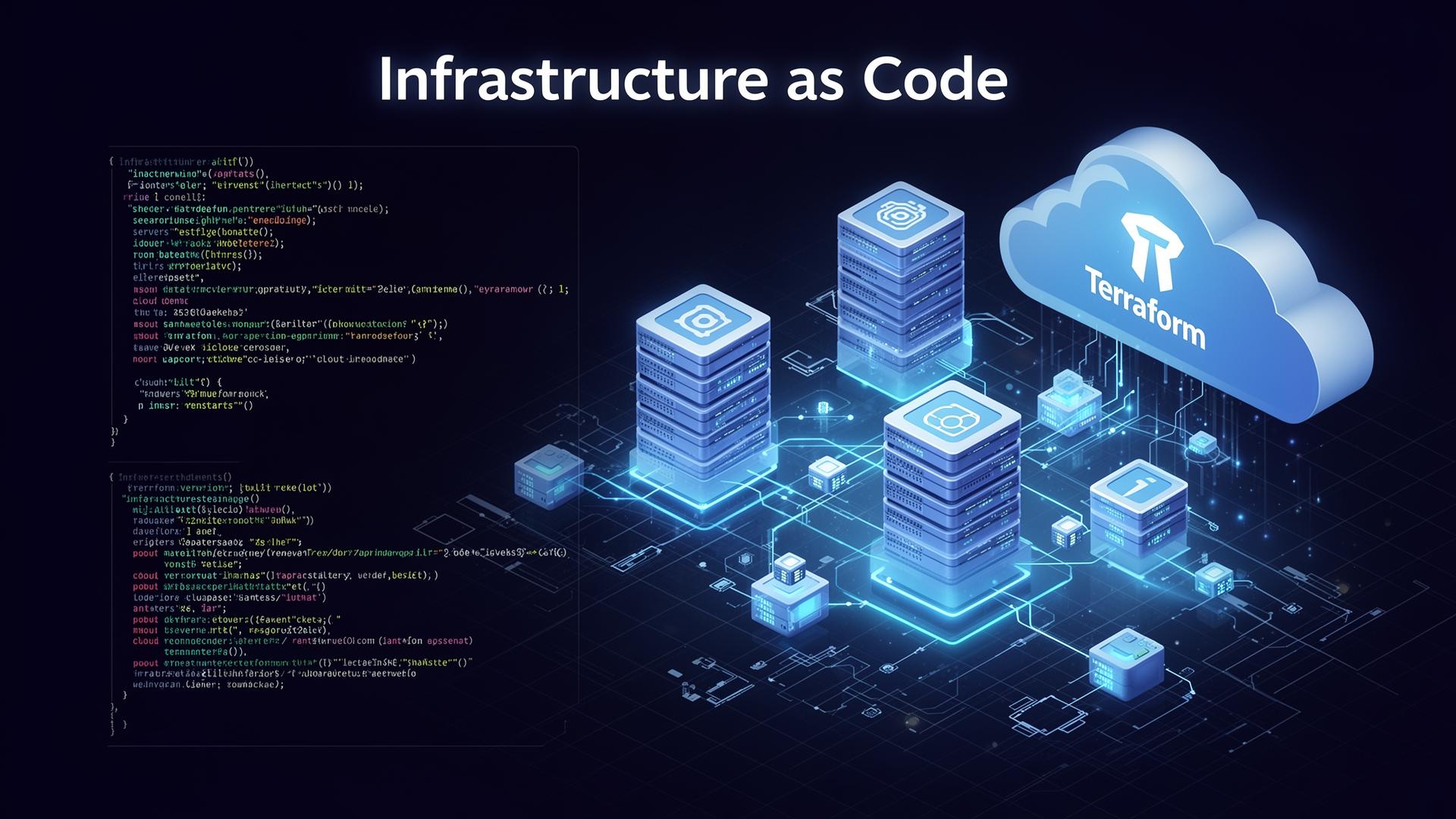
Infrastructure as Code: Stop Clicking and Start Coding Your Cloud
There is something deeply unsatisfying about clicking through cloud provider consoles to provision infrastructure. You create a virtual machine here, configure a security group there, set up a load balancer somewhere else. An hour later you have a working environment. Then someone asks you to create an identical environment for testing. Good luck remembering every setting you configured.
Infrastructure as Code solves this problem by treating infrastructure configuration like software. You define what you want in code files. Tools interpret those definitions and create the actual infrastructure. Changes go through version control. Testing validates configurations before deployment.
The Core Concept
At its heart, Infrastructure as Code means writing declarative definitions of your desired state. You describe what you want rather than the steps to achieve it. The tooling figures out how to make reality match your description.
Tooling Landscape
Several tools dominate the Infrastructure as Code space. Terraform from HashiCorp works across multiple cloud providers. Pulumi lets you define infrastructure using general purpose programming languages. Cloud providers offer their own solutions like AWS CloudFormation and Azure ARM templates.
Practical Benefits
Version control transforms infrastructure management. Every change is recorded. Code review applies to infrastructure. Testing catches problems before deployment. Automation removes human error from routine operations.
If you want help adopting Infrastructure as Code, reach out through the contact page.
## Practical Starting Point: Pick One Workflow
If you are starting from “we have some Terraform in a repo” or “we click in Azure/AWS and copy notes into a wiki”, the quickest win is to standardise one repeatable workflow:
1. **Choose one toolchain** (for example Terraform + a remote state backend). 2. **Define an environment model** (dev, test, prod) and name it consistently. 3. **Create a module boundary** (networking, compute, identity) so teams do not reinvent the wheel.
The goal is not perfection. It is repeatability and auditability.
## Guardrails That Matter in the Real World
Infrastructure as Code becomes a business risk if it is not controlled. Put these guardrails in early:
- **State locking and backups** so parallel runs do not corrupt state.
- **Policy-as-code** (even simple rules) to prevent risky resources (public buckets, wide-open security groups).
- **Review and approvals** via pull requests; no direct changes to main.
- **Secrets separation**: keep credentials out of code; inject at runtime via a secret manager.
## Common Failure Modes (and How to Avoid Them)
**Snowflake modules**: teams fork a module and change it. Avoid by publishing a versioned module registry and documenting upgrade steps.
**One giant repo**: everything becomes coupled. Split by domain (network, platform, apps) and define clear ownership.
**No drift detection**: manual clicks happen anyway. Schedule drift checks and treat drift like a defect.