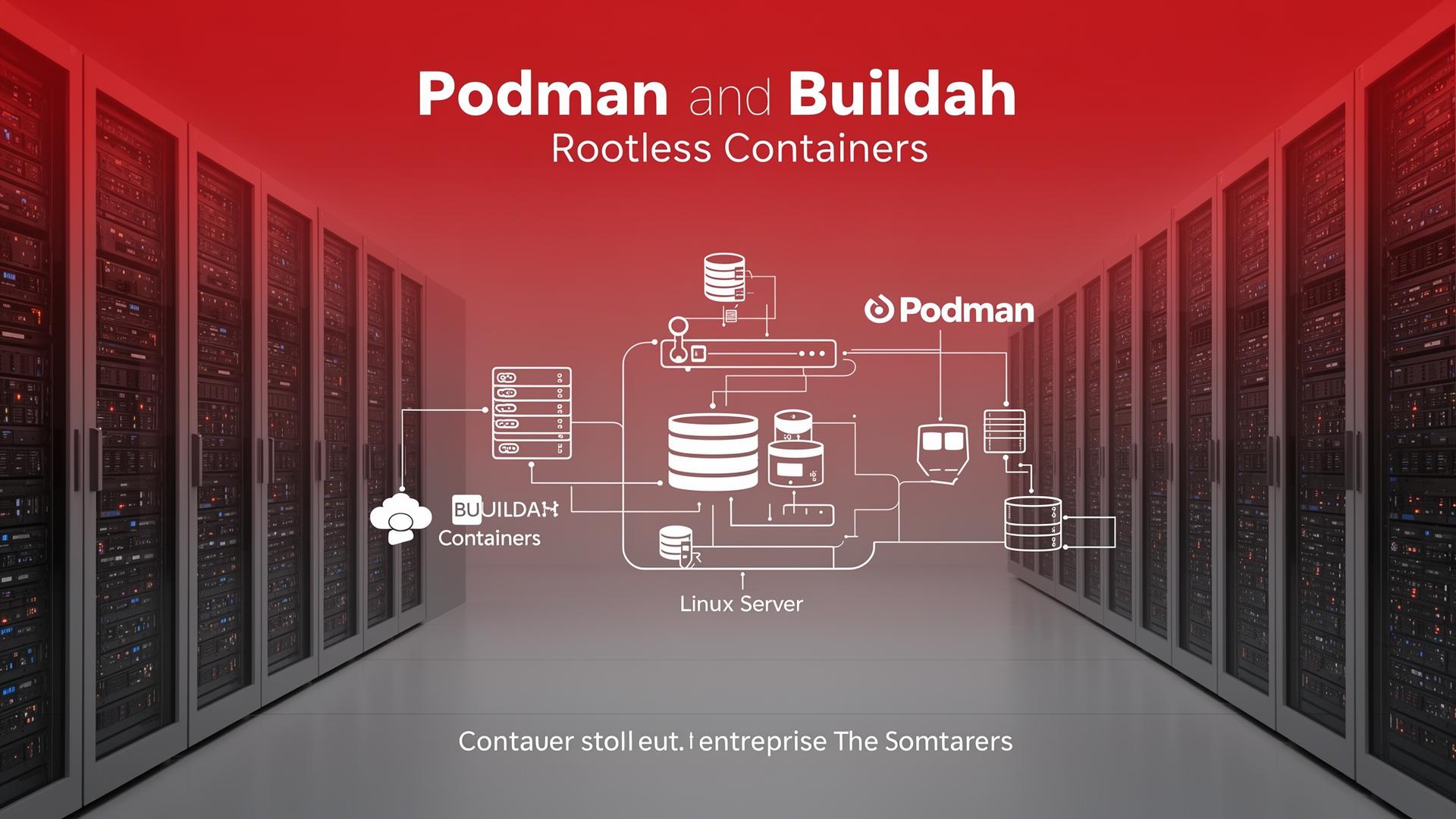
# Linux Containers Without Docker: Podman and Buildah for Enterprise
Docker revolutionised software deployment. Containers became ubiquitous. But Docker the company and Docker the technology are not synonymous. The underlying container technology is standard Linux functionality. Docker provides one interface to that functionality. It is not the only interface.
Podman and Buildah offer alternatives that address Docker limitations. Rootless operation improves security. Daemonless architecture simplifies operations. Systemd integration suits production Linux systems.
## Docker Limitations
Docker works well but has characteristics that create challenges.
**Docker requires root privileges.** The Docker daemon runs as root. Users interact with that daemon. This model creates security concerns.
**Daemon architecture** introduces dependency. All containers depend on the daemon. Daemon restart affects all running containers.
**Licensing changes** affected Docker Desktop. Restrictions on commercial use changed the economics.
## Podman Fundamentals
Podman provides Docker compatible container management without Docker's architecture.
**Daemonless operation** eliminates the central daemon. Each Podman command runs as a separate process. No persistent service managing containers.
**Rootless containers** run without root privileges. Users run containers without elevated permissions. Security improves significantly.
**Docker compatibility** eases transition. Podman command syntax matches Docker. In most cases you can simply alias docker to podman.
**Pod support** groups containers logically. Multiple containers can share network namespace. Kubernetes concepts translate to local development.
**Systemd integration** enables production operation. Podman can generate systemd unit files from containers.
## Building Images with Buildah
Buildah focuses specifically on building container images.
**Dockerfile compatibility** enables familiar workflows. Buildah builds from Dockerfiles. Existing build definitions work unchanged.
**Script based building** offers alternatives. Buildah commands can build images interactively or through shell scripts.
**Rootless building** matches rootless running. Build images without root privileges.
## Enterprise Benefits
**Security posture** improves with rootless operation. Not granting users root access to run containers reduces risk.
**Compliance requirements** may mandate rootless. Some security standards require non root container operation. Podman satisfies these requirements.
**Systemd integration** suits production Linux. Containers managed through systemd follow standard Linux patterns.
If your organisation wants to explore Podman and Buildah for container workflows, contact us through our contact page.
## Why Podman Matters in Enterprises
Podman’s rootless model reduces risk: you can build and run containers without a daemon running as root.
## Adoption Tips
- standardise build images,
- integrate image scanning,
- and document rootless networking differences.
For many teams, the biggest change is tooling muscle memory, not capability.