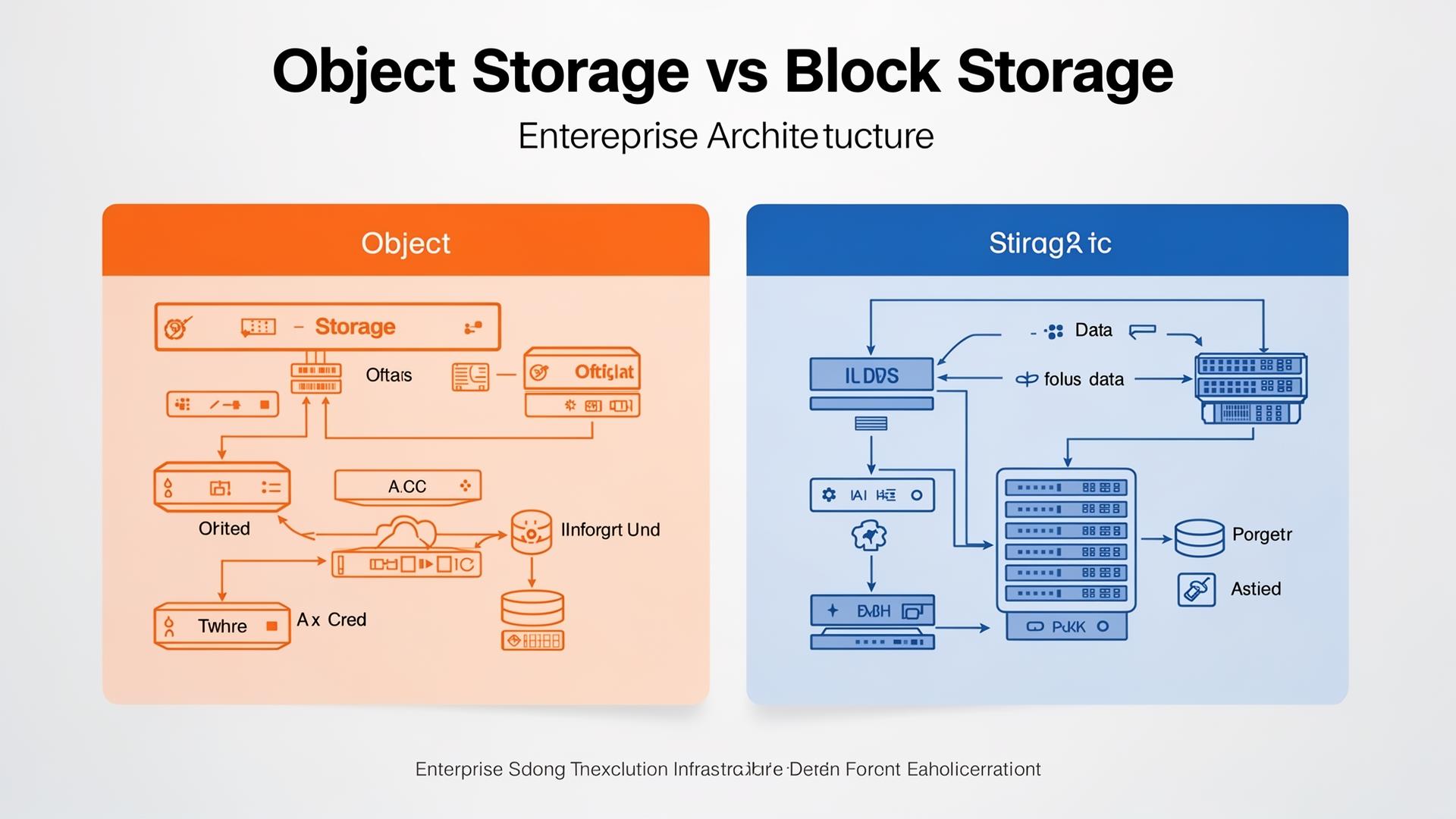
# Object Storage vs Block Storage: Choosing the Right Cloud Storage Type
Cloud storage appears simple until you need to choose between options. Block storage, object storage, file storage. Each serves different purposes. Selecting incorrectly means either paying too much or suffering inadequate performance.
Understanding the fundamental differences enables informed decisions. The right choice depends on workload characteristics, access patterns, and cost constraints.
## Block Storage Fundamentals
Block storage presents raw storage volumes to operating systems. The storage appears as a disk drive. The operating system formats it with a file system. Applications read and write files normally.
**Performance** characterises block storage. Low latency access enables demanding workloads. IOPS specifications guarantee throughput. SSD backed options deliver microsecond response times.
**Use cases** include databases, virtual machines, and applications requiring file system semantics. Anything expecting a traditional disk drive works naturally with block storage.
**Limitations** constrain block storage applications. Volumes attach to single instances. Scaling requires adding volumes or increasing size. Geographic replication is complex. Costs per gigabyte exceed other options.
## Object Storage Fundamentals
Object storage organises data as objects with metadata. Each object has a unique identifier. Access occurs through APIs rather than file system operations. The storage system handles distribution and replication.
**Scalability** defines object storage. Systems scale to exabytes without performance degradation. Adding capacity does not require application changes. Objects distribute across infrastructure automatically.
**Durability** exceeds block storage. Multiple copies across availability zones protect against failure. Eleven nines durability means losing one object in ten billion per year. Critical data persists reliably.
**Cost efficiency** enables large scale storage. Per gigabyte costs fall below block storage. Tiered storage moves cold data to cheaper options automatically. Analytics and archive workloads become economically viable.
**Access patterns** differ from traditional storage. API operations retrieve objects by identifier. Listing large numbers of objects may be slow. Strong consistency guarantees vary by implementation.
## Selection Criteria
**Latency requirements** often determine choice. Databases needing millisecond response require block storage. Content delivery tolerating hundreds of milliseconds works well with object storage.
**Access patterns** matter significantly. Random access to small pieces of files needs block storage. Sequential access to complete files works well with objects. Concurrent access from multiple systems favours object storage.
**Scale expectations** influence architecture. Terabytes of transactional data fits block storage economics. Petabytes of media files demand object storage cost structure.
**Data characteristics** affect fit. Structured data with transactions wants block storage. Unstructured content like images, videos, and backups suits object storage perfectly.
## Hybrid Approaches
Many architectures combine storage types. Databases run on block storage for performance. The same application stores user uploads in object storage. Backup systems copy block volumes to object storage for cost effective retention.
**Tiering strategies** move data between storage types based on access patterns. Hot data stays on block storage. Warm data moves to object storage standard tier. Cold data migrates to archive tiers.
**Caching layers** address performance gaps. Content delivery networks cache frequently accessed objects. Local caches reduce latency for repeated access. The architecture matches storage cost to access requirements.
If your organisation needs help designing cloud storage architecture or optimising storage costs, contact us through our contact page. We help businesses select and implement storage solutions that balance performance, durability, and cost.