## From DevOps slogan to platform reality
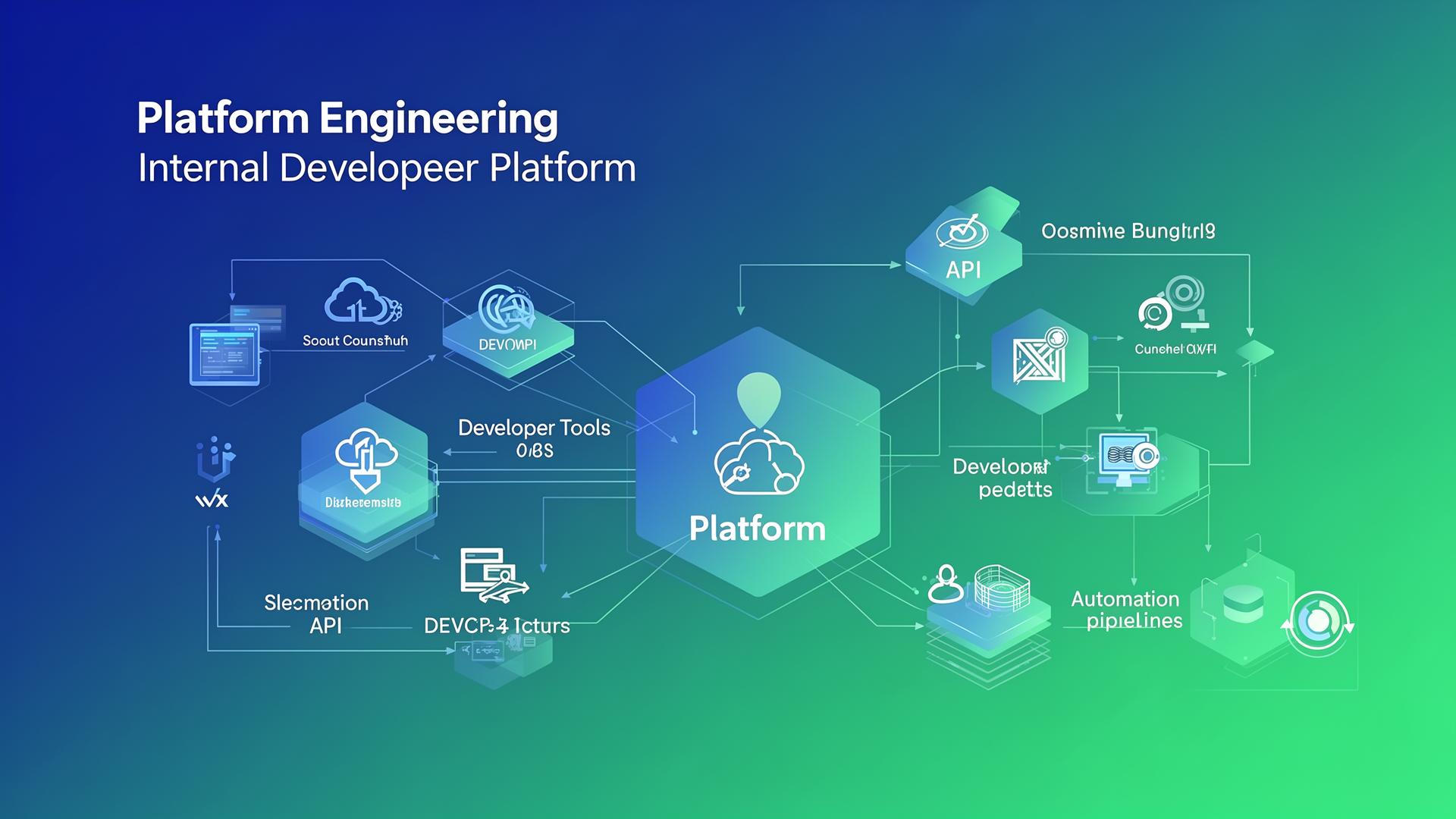
A decade of DevOps left many organisations with the worst of both worlds: developers expected to operate everything themselves, and operations teams reduced to ticket processors. Platform engineering is the correction. The idea is simple. A small platform team builds and runs an Internal Developer Platform, the IDP, that gives product teams a paved road for everything from local development to production operations.
In 2026, the IDP is no longer optional for any organisation with more than a handful of teams. The question is no longer whether to build one, but what makes it good.
## Treat the platform as a product
The single biggest predictor of IDP success is treating the platform itself as a product. That means:
- A named product owner with a roadmap.
- Real users, the developers, with regular feedback loops.
- A backlog driven by adoption metrics and developer pain, not internal preference.
- A versioned, documented contract with users about what the platform provides and what it does not.
Platforms that are run as side projects by an operations team rarely thrive. Platforms that are run as products do.
## What good IDPs include
The specifics vary, but a strong IDP in 2026 typically covers:
- **Self-service environments** spun up from a template in minutes, not days.
- **Golden paths** for common service shapes, with sensible defaults for runtime, observability and security.
- **A standard service catalogue** that every team can read to discover what already exists.
- **CI/CD as a service** with secure, opinionated pipelines that teams compose rather than reinvent.
- **Observability built in.** Logs, metrics and traces wired up automatically with sensible dashboards and alerts.
- **Secrets and identity** handled centrally, never copy-pasted into config.
- **Cost and security visibility** surfaced to teams in the same portal they use to deploy.
The interface is usually a developer portal such as Backstage or a commercial equivalent, plus a CLI for automation.
## Golden paths, not gold cages
A golden path is the recommended way to build a particular kind of service. It is opinionated and supported. Off the path is allowed but unsupported.
Good golden paths share three properties:
1. They are **the easiest option**. If the unsupported alternative is faster, developers will take it. 2. They are **regularly updated** so they remain the best practice, not the historical best practice. 3. They are **observable**. The platform team can see who is on the path and who has drifted.
Resist the urge to forbid alternatives. Make the paved road so smooth that nobody wants to walk on the gravel.
## Developer experience metrics
Measure the platform with metrics that matter to developers:
- **Time to first commit** for a new joiner.
- **Time to first production deployment** for a new service.
- **Lead time for a change** to reach production.
- **Change failure rate.**
- **Time to recover** from a production incident.
- **Developer satisfaction** with the platform, surveyed quarterly.
These map directly to the DORA metrics, with the addition of explicit satisfaction scores. Track them per team and per service shape so you can see where the platform is helping and where it is in the way.
## AI inside the platform
In 2026, AI is no longer a separate initiative bolted on top of the IDP. It lives inside it:
- **Code generation** for new services from approved templates.
- **Chat assistants** in the developer portal that answer questions about your specific platform, not the public internet.
- **Operational copilots** that explain incidents, suggest queries and draft postmortems.
- **Automated reviews** that flag deviations from golden paths or security policies before merge.
Each of these is a small win. Together they meaningfully reduce cognitive load.
## Common pitfalls
- **Building too much too soon.** Start with one or two golden paths and a working portal, not a grand framework.
- **Forcing migration.** Teams resist mandates. Make the new path so attractive that migration becomes the obvious choice.
- **Hiding the platform team.** Be visible, run office hours, attend product team standups, share the roadmap.
- **Confusing platform with infrastructure.** The platform is the experience. Infrastructure is a means to that end.
A great IDP is invisible when things are going well. Developers ship faster, operations sleep better, and security gets stronger by default. That outcome is what platform engineering in 2026 is really about.