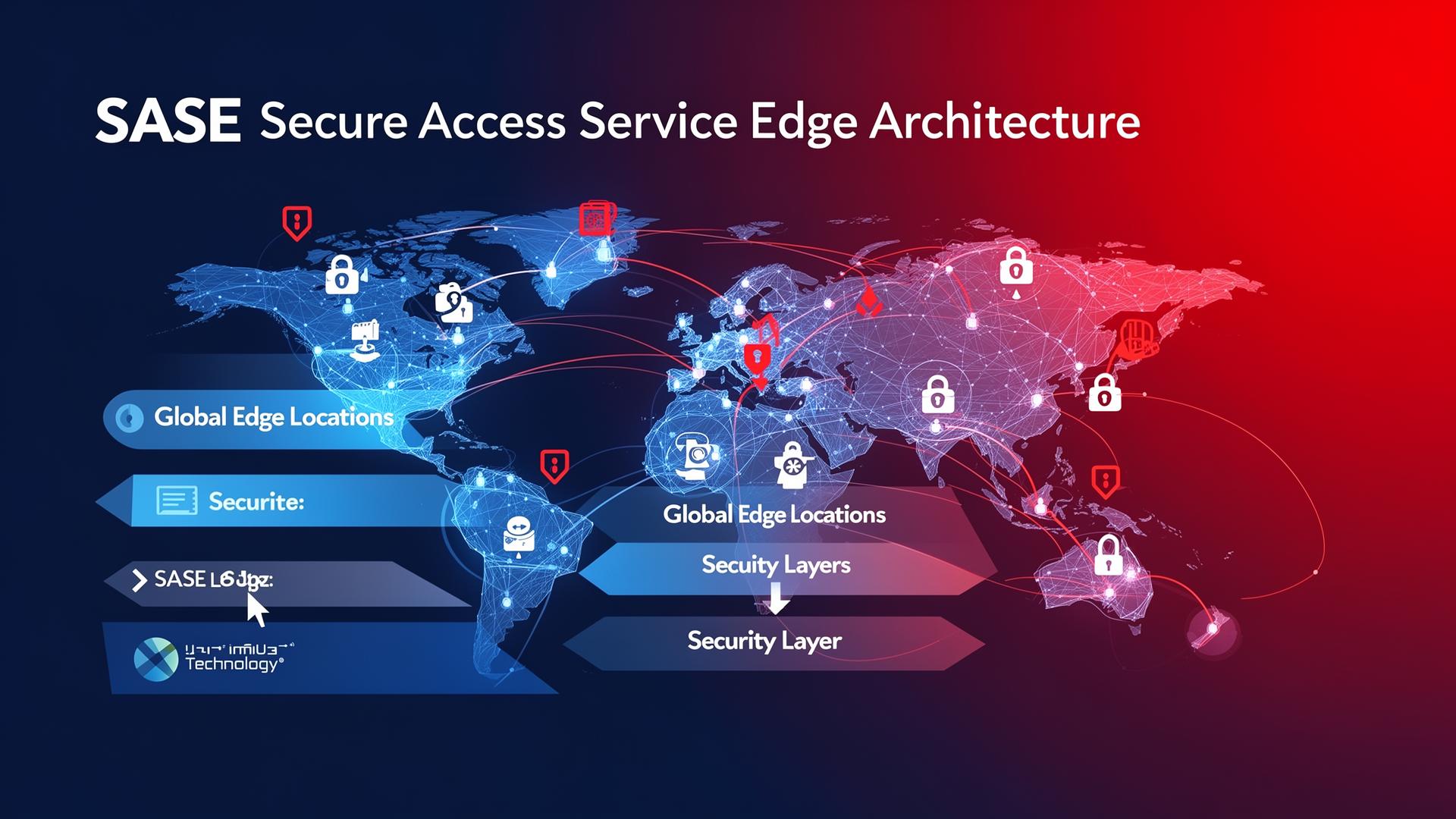
# SASE Architecture: Converging Network and Security for the Modern Enterprise
Traditional network architecture assumed most users sat in offices accessing applications in data centres. Firewalls protected the perimeter. VPNs extended access to remote users. The security model worked because traffic patterns were predictable.
This model cannot survive current reality. Users work from anywhere. Applications run in multiple clouds. Mobile devices access corporate resources constantly. The perimeter has dissolved. Traffic patterns are unpredictable. Backhauling everything through data centres creates latency and cost without providing effective security.
SASE, Secure Access Service Edge, reconceives network and security architecture for distributed organisations. It converges networking and security functions into cloud delivered service. Security follows users rather than defending static perimeters.
## Core SASE Components
**SD-WAN** provides intelligent connectivity. Software defined wide area networking optimises paths across multiple transport options. Internet, MPLS, LTE, whatever is available. Application aware routing chooses the best path for each traffic type.
**Secure Web Gateway** protects internet access. URL filtering blocks malicious and inappropriate sites. SSL inspection examines encrypted traffic. Malware scanning prevents downloads. Data loss prevention catches sensitive information leaving.
**Cloud Access Security Broker** extends control to SaaS. Visibility into which cloud services employees use. Control over data sharing and downloads. Compliance enforcement for regulated information. Shadow IT becomes visible.
**Zero Trust Network Access** replaces traditional VPN. Users authenticate to access specific applications rather than entire network segments. Continuous verification ensures trust persists. Least privilege limits lateral movement.
**Firewall as a Service** delivers network security from the cloud. Stateful inspection, intrusion prevention, and advanced threat protection. Applied at edge locations near users rather than requiring traffic backhaul.
## Why SASE Matters Now
**Remote work** has become permanent for many organisations. Forcing traffic through data centres creates poor experience. Users bypass VPN because performance suffers. Security degrades when security tools are avoided.
**Cloud migration** continues accelerating. SaaS applications dominate productivity workloads. Custom applications run in cloud infrastructure. The data centre no longer hosts what users access most.
**Cost pressure** motivates architecture change. MPLS circuits are expensive. Internet connectivity costs a fraction. SD-WAN enables using cheaper transport without sacrificing reliability.
**Security consolidation** reduces complexity. Multiple point products create management burden. Integration gaps leave coverage holes. Unified platforms simplify while improving protection.
## Implementation Approach
**Assessment** identifies current state. Document existing network topology, security controls, and application dependencies. Understand traffic patterns and user locations. This baseline informs migration planning.
**Vendor evaluation** requires careful analysis. The SASE market includes both specialists and platform vendors extending into new territory. Feature completeness, performance, integration capabilities, and roadmap all matter.
**Phased migration** manages risk. Start with specific use cases or locations. New sites deploy directly to SASE. Existing locations migrate incrementally. Learning accumulates before full commitment.
**Policy translation** adapts existing rules. Security policies developed for perimeter enforcement need adjustment for edge enforcement. The translation requires understanding both old and new models.
If your organisation is evaluating SASE or needs help with network and security transformation, contact us through our contact page. We help businesses implement modern architectures that protect distributed workforces.