# SASE Architecture: Converging Networking and Security for the Modern Enterprise
Enterprise networks evolved piecemeal. WAN optimisation, cloud access security, VPN concentrators, web gateways—each solved specific problems. The resulting architecture sprawled across data centres with traffic hairpinning through security stacks. Performance suffered. Complexity grew. Costs escalated.
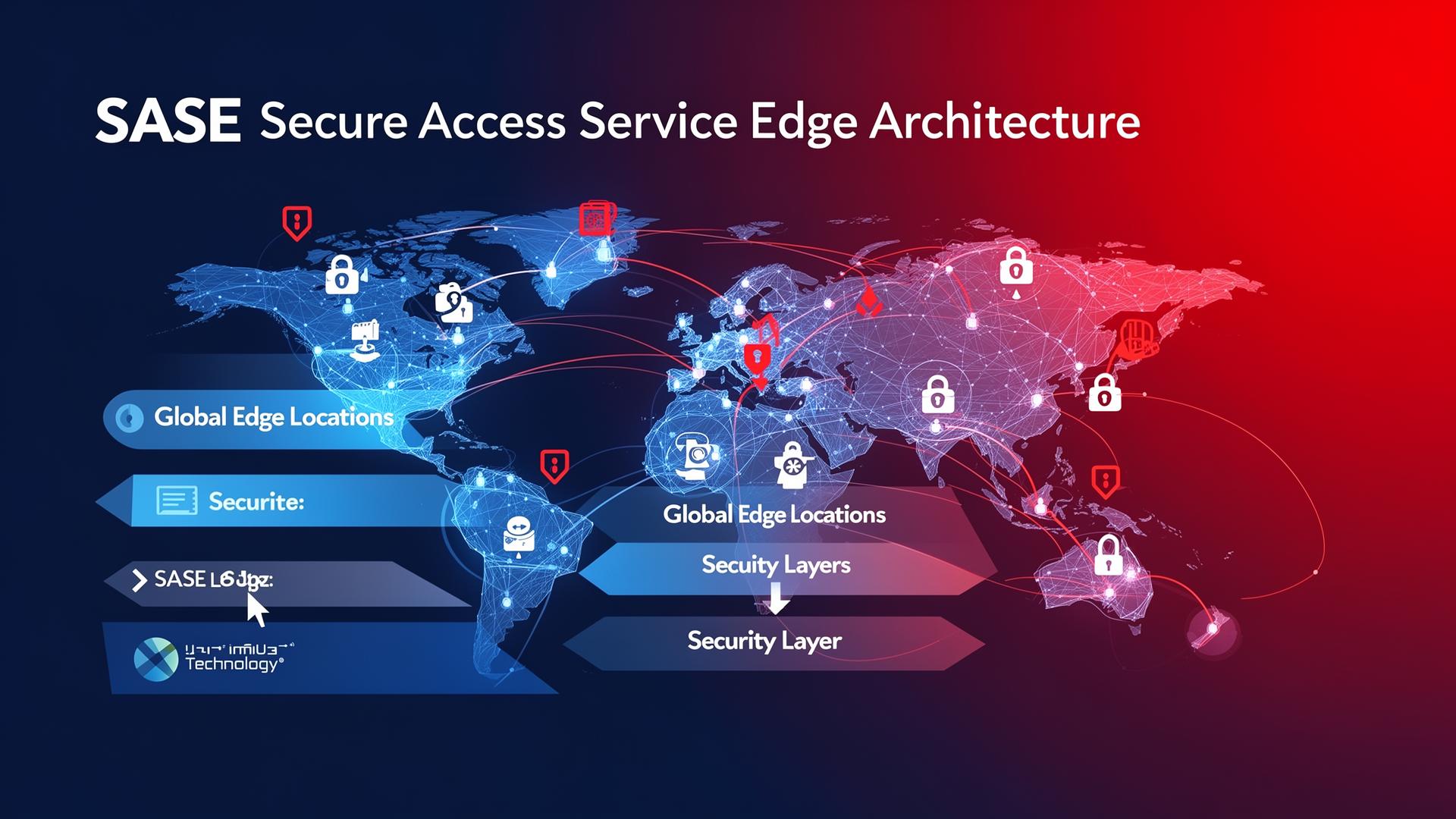
SASE, Secure Access Service Edge, reconceptualises the architecture. Networking and security converge into cloud-delivered service. Users connect to nearby points of presence. Security applies at the edge. Backhaul eliminates.
## SASE Core Components
Understanding constituent parts clarifies the whole.
**SD-WAN** provides intelligent connectivity. Software-defined networking optimises traffic paths. Multiple transport links aggregate bandwidth. Application-aware routing improves performance.
**ZTNA (Zero Trust Network Access)** replaces VPN. Users authenticate to access specific applications. No network-level access granted. Continuous verification rather than perimeter trust.
**SWG (Secure Web Gateway)** protects web access. URL filtering blocks malicious sites. SSL inspection examines encrypted traffic. Data loss prevention catches sensitive data.
**CASB (Cloud Access Security Broker)** secures SaaS. Visibility into cloud application usage. Control over data sharing. Shadow IT discovery and management.
**FWaaS (Firewall as a Service)** delivers network security from cloud. Intrusion prevention, threat detection, and policy enforcement. No hardware to manage at branches.
## Why SASE Matters
Business drivers make SASE compelling.
**Distributed workforce** needs secure access everywhere. Office, home, and travel scenarios need consistent security. Backhauling remote worker traffic through data centres is impractical.
**Cloud application adoption** changes traffic patterns. Most traffic goes to internet destinations. Security should apply close to users, not in distant data centres.
**Operational simplification** reduces burden. Multiple point products create management complexity. Unified platform consolidates control. Single policy framework applies everywhere.
**Cost optimisation** accompanies architecture change. Eliminate redundant hardware. Reduce MPLS dependency. Consolidate vendor relationships.
## Implementation Approach
SASE transformation requires thoughtful planning.
**Assess current state** before designing future. Document existing architecture. Identify pain points. Understand traffic patterns and security requirements.
**Prioritise use cases** for phased implementation. Remote worker access often provides quick wins. Branch transformation follows. Data centre connectivity evolves last.
**Select vendor carefully.** SASE market is maturing but fragmented. True SASE versus rebranded legacy varies. Evaluate integration completeness and operational experience.
If your organisation needs help evaluating SASE architecture or planning network security transformation, contact us through our contact page.