# Spatial Computing in Enterprise: Beyond the Consumer Headset
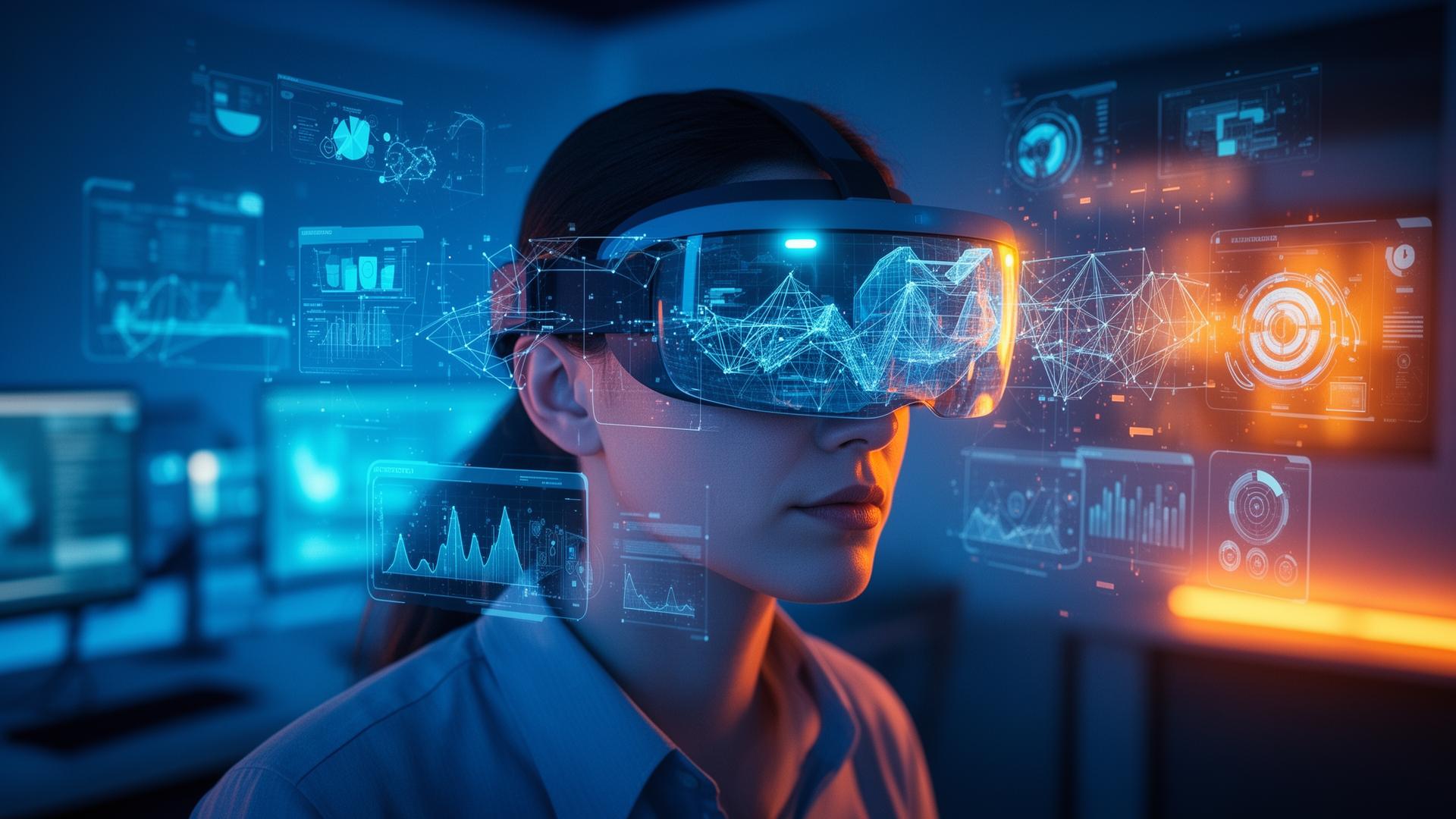
Forget what you think you know about virtual reality headsets and gaming applications. Spatial computing in the enterprise is something quite different. It is about augmenting human capabilities in industrial, medical, and professional settings where the ability to overlay digital information on the physical world creates genuine productivity gains.
## What Spatial Computing Really Means
Spatial computing is the umbrella term for technologies that merge physical and digital environments. This includes augmented reality, where digital content overlays the real world; virtual reality, where users are fully immersed in digital environments; and mixed reality, where digital objects interact with physical surroundings.
The enterprise applications are distinct from consumer use cases. We are not talking about entertainment or social experiences. We are talking about giving field technicians access to repair procedures overlaid on the equipment they are servicing, surgeons planning complex procedures using 3D patient models, and designers collaborating on products in shared virtual spaces.
## Industrial and Manufacturing Applications
Remote expert guidance is transforming field service operations. When a technician encounters an unfamiliar problem, rather than describing it over the phone or waiting for an expert to travel on site, they can share their field of view in real time. The remote expert sees what the technician sees and can annotate the view with instructions and highlights.
Assembly guidance reduces errors and training time. Complex assembly tasks that previously required extensive training can be simplified with step-by-step spatial instructions. The next component to install and its correct orientation can be highlighted directly in the worker's view.
Quality inspection benefits from augmented overlays that highlight defects or deviations from specifications. An inspector might see a digital model of the ideal component superimposed on the actual part, with any differences highlighted for attention.
Maintenance and repair workflows become more efficient when technicians can access documentation, schematics, and expert guidance without leaving the equipment they are working on. This reduces the back-and-forth between the equipment and a desk that characterised previous workflows.
## Healthcare and Life Sciences Applications
Surgical planning advances with spatial computing. Surgeons can explore 3D reconstructions of patient anatomy before procedures, identifying potential complications and optimising their approach. During surgery, augmented overlays can guide incisions and highlight critical structures to avoid.
Medical training benefits from simulated procedures that provide hands-on experience without risk to patients. Trainees can practise complex interventions repeatedly, receiving feedback and building muscle memory in safe environments.
Patient education improves when clinicians can show patients visualisations of their conditions and planned treatments. Abstract explanations become concrete when patients can see 3D models of their own anatomy.
Pharmaceutical research uses virtual molecular visualisation to understand drug interactions and design new compounds. Researchers can literally walk through molecular structures at human scale.
## Architecture, Engineering, and Construction
Design review processes are transformed when stakeholders can experience proposed buildings before construction begins. Walking through a virtual model at actual scale reveals issues that 2D drawings and even 3D renderings on screens cannot convey.
On-site construction guidance ensures that what gets built matches what was designed. Workers can see digital blueprints overlaid on the construction site, reducing errors and rework.
Facilities management becomes more efficient when building information models are accessible at the point of need. A maintenance technician can see the routing of pipes and cables behind walls without opening them up.
Clash detection identifies conflicts between building systems before they become expensive problems. When mechanical, electrical, and plumbing systems are visualised together in 3D, potential collisions become obvious.
## Implementation Considerations
Hardware selection involves tradeoffs between capability, comfort, and cost. Fully immersive headsets offer the richest experiences but may cause fatigue in extended use. Lighter augmented reality glasses are more comfortable but currently less capable. The right choice depends on your specific use cases.
Content development requires new skills and tools. Creating effective spatial experiences is different from traditional software development or even 3D modelling. Invest in training or partnerships that provide these capabilities.
Infrastructure requirements include sufficient bandwidth for streaming spatial content and computing power for real-time rendering. Evaluate whether your network and device capabilities are adequate before committing to spatial initiatives.
Change management is essential. Spatial computing represents a new way of working that may meet resistance from workers accustomed to traditional methods. Engage users early, demonstrate value clearly, and provide adequate training.
**Interested in exploring spatial computing for your organisation?**
Contact Lara IT Solutions for expert guidance.